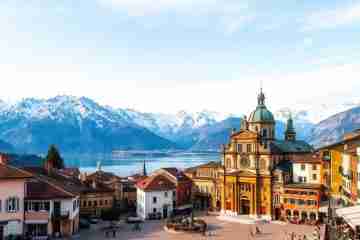
Nestled between Milan and Verona in Italy’s Lombardy region, this historic city offers travelers an authentic slice of Italian culture. Once known as Brixia during Roman times, it now blends ancient ruins with Renaissance charm. Recognized as Italy’s Capital of Culture in 2023, the destination invites exploration beyond crowded tourist hotspots.
Reaching the city is straightforward for international visitors. High-speed trains connect Rome to the heart of town in under four hours, while Milan sits just 90 kilometers away via the A35 highway. Free parking near Castello makes road trips equally convenient for those exploring Northern Italy’s scenic routes.
What sets this location apart is its layered history. Roman amphitheaters stand alongside medieval towers, while Renaissance palaces host modern cafes. Visitors discover hidden courtyards and world-class museums without battling crowds. Its strategic position also allows easy day trips to Lake Garda or Verona’s iconic attractions.
Key Takeaways
- Prime location between Milan and Verona with multiple transportation options
- Designated Italy’s Capital of Culture in 2023 for artistic and historical significance
- Mix of Roman, medieval, and Renaissance architecture creates unique urban landscape
- Free parking available near Castello for drivers exploring the Lombardy region
- Ideal base for discovering Northern Italy’s lakes, vineyards, and cultural landmarks
Introduction to Brescia: A Hidden Gem in Northern Italy
Few destinations encapsulate three millennia of European history as vividly as this underrated city. Founded in 1,200 BC, its story spans Celtic tribes, Roman emperors, and Renaissance visionaries – all etched into walkable neighborhoods.
Where Civilizations Converge
What makes this place extraordinary is its uninterrupted cultural evolution. Visitors can examine Celtic artifacts from 700 BC in the morning and admire Venetian-style loggias by afternoon. Four iconic squares – Roman, Medieval, Renaissance, and Modern – form an open-air timeline spanning 2,000 years.
Beyond the Tourist Trail
While crowds flock to nearby hotspots, those who visit Brescia discover authentic northern Italy. Locals sip espresso where Roman senators once debated, creating living connections to the past. As Italy’s 2023 Capital of Culture, the city offers:
- UNESCO-listed ruins integrated with modern infrastructure
- Art collections rivaling Milan’s – without queues
- Easy access to Lake Garda and Verona
This crossroads of northern Italy rewards travelers seeking depth over crowds. From archaeological digs beneath piazzas to innovative Lombard cuisine, every street reveals new things Brescia has preserved for generations.
Uncovering the Rich History of Brescia
The city’s UNESCO-listed ruins offer a tangible connection to its Roman roots. Beneath modern streets lie ancient foundations where emperors once walked, creating a living museum that spans two millennia.
Ancient Roman Origins and UNESCO Heritage Sites
At the heart of this historical treasure lies Brixia – one of northern Italy’s most significant Roman settlements. The Republican Sanctuary astounds visitors with vibrant frescoes preserved since the 1st century BC. Archaeologists consider these paintings among Europe’s best-preserved Roman artworks.
The Capitoline Temple complex reveals Rome’s engineering genius. Built in 73 AD, its towering columns frame the original Winged Victory statue – a bronze masterpiece hidden for 1,700 years. As historian Dr. Lucia Mariani notes:
“This site rewrites our understanding of religious practices in imperial Roman provinces.”
| Period | Key Feature | Unique Aspect |
|---|---|---|
| Roman | Capitoline Temple | Original bronze statues |
| Medieval | City Walls | Integrated Roman foundations |
| Renaissance | Palazzos | Classical columns with frescoed ceilings |
Medieval Castles and Renaissance Influences
Brescia Castle dominates the skyline from Colle Cidneo hill. This 13th-century fortress showcases layered defensive systems from Visconti and Venetian rulers. Its underground passages whisper stories of medieval sieges.
Renaissance architects later transformed the urban landscape. They blended classical symmetry with innovative designs, seen in the Loggia Palace’s harmonious proportions. This fusion creates streets where every corner reveals evolving Italian artistry across centuries.
Brescia Sightseeing: Must-See Landmarks
Two architectural marvels stand as testaments to the city’s layered past. These iconic sites blend military might with artistic brilliance, offering immersive journeys through time.
Guardian of History: Brescia Castle
The fortress crowning Colle Cidneo hill commands attention with its 16th-century entrance portal. Flanked by San Faustino and San Marco bastions, this strategic stronghold reveals sweeping Lombardy views from its ramparts. Inside, the Luigi Marzoli Museum displays rare 15th-century armor – one of Europe’s most complete collections.

History buffs appreciate the Risorgimento Museum’s digital archives. They showcase the area’s pivotal role in Italy’s unification through interactive exhibits and Renaissance-era artifacts.
Santa Giulia Museum: Time Capsule
This UNESCO-recognized complex transforms a Longobard monastery into a cultural treasure house. Its 14,000-square-meter layout guides visitors from Bronze Age tools to Baroque masterpieces. Santa Giulia Museum excels at making ancient history tangible – Roman mosaics lie beneath glass walkways as you explore.
Curators highlight connections between eras through thematic displays. A 4th-century BC Celtic helmet shares space with Venetian-era frescoes, proving the building itself narrates Brescia’s evolution.
Exploring the Duomo Vecchio and Duomo Nuovo
Few European squares showcase architectural evolution as dramatically as Piazza Paolo VI. Locals call it the Square of the Two Cathedrals, where Romanesque austerity meets Baroque grandeur in a single glance. This rare pairing of sacred structures offers a masterclass in Italy’s shifting artistic priorities across seven centuries.

Architectural Wonders of the Two Cathedrals
The Duomo Vecchio, completed in 1100, defies expectations with its circular stone design. Its underground crypt preserves remnants of 6th-century religious sites, while the main chapel houses Bishop Berardo Maggi’s striking red marble sarcophagus. Historians praise its unaltered Romanesque features – a rarity in northern Italy.
Across the square, the Duomo Nuovo soars with Italy’s third-tallest dome. Built over two centuries (1604-1825), its Baroque façade dazzles with sculpted saints and intricate cornices. Sunlight filters through stained glass onto frescoed ceilings, creating an ethereal contrast to its older neighbor.
| Cathedral | Architectural Style | Key Feature |
|---|---|---|
| Duomo Vecchio | Romanesque | Underground crypt with ancient relics |
| Duomo Nuovo | Baroque | 97-meter dome with panoramic city views |
Visitors should note the old-new cathedrals have complementary schedules. The winter cathedral (Duomo Vecchio) closes Mondays-Tuesdays, while the summer cathedral (Duomo Nuovo) welcomes guests daily. Morning visits reveal quiet spirituality; evenings highlight golden-hour glow on marble facades.
Delving into Piazza Experiences
The rhythm of urban life finds its pulse in historic squares where past and present collide. These open-air stages host everything from morning espresso rituals to centuries-old traditions, offering visitors front-row seats to authentic Italian culture.
Venetian Elegance in Stone
Piazza della Loggia embodies Renaissance grandeur with its Venetian-inspired colonnades. The 15th-century town hall dominates the space, its classical arches framing lively cafes where locals debate politics over cappuccino. Look up to spot the square’s star attraction – a 1546 astronomical clock tracking moon cycles and zodiac signs.
“The ‘Màcc de le ure’ bell-ringers have kept perfect time for five centuries – a testament to Brescian craftsmanship,” notes architectural historian Marco Ferrara.
Wandering the surrounding alleys reveals hidden trattorias and artisan workshops. Evening transforms the area into an aperitivo hub, with spritzes clinking under portico shadows.
Modernist Marvels and Markets
Piazza della Vittoria presents a striking contrast with its 1930s rationalist design. The Torrione INA tower – Italy’s first skyscraper – looms over monthly antique markets where vintage maps share tables with Murano glass. Car enthusiasts flock here during the Mille Miglia race, when classic vehicles undergo technical inspections on the square.
| Square | Architectural Style | Signature Experience |
|---|---|---|
| Della Loggia | Renaissance | Sunset aperitivi under colonnades |
| Della Vittoria | Rationalist | Antique market treasure hunts |
Morning light bathes the Loggia’s marble facades, while evening spotlights accentuate Vittoria’s geometric lines. Together, these squares form the city’s beating heart – one preserving history, the other racing toward modernity.
Savoring Brescia: Food, Wine, and Local Cuisine
Northern Italy’s culinary traditions shine brightest where recipes pass through generations. This region’s food culture thrives in family-run trattorias and sun-drenched vineyards, offering travelers authentic tastes of Lombardy’s agricultural heritage.
Traditional Dishes and Iconic Sweets
Local menus celebrate seasonal ingredients with dishes like casoncelli – delicate ravioli stuffed with spiced meats and raisins. Pair these with sparkling wine from the Franciacorta area, where centuries-old cellars produce Italy’s finest bubbly using traditional methods.
Sweet seekers find paradise in torta delle rose, a rose-shaped pastry layered with almonds and citrus. Food tours often highlight this dessert alongside savory sparkling wine pairings, creating balanced flavor journeys.
Three essential experiences define the area:
– Evening wine tastings at vineyards overlooking Lake Iseo
– Market visits to sample formaggella cheese aged in alpine caves
– Cooking classes mastering saffron-infused risotto recipes
This food-focused exploration reveals why the region remains a place where meals become memories. From crisp sparkling wines to hearty stews simmered in copper pots, every bite connects visitors to the land’s rich bounty.