Italy’s northern gem seamlessly blends centuries-old heritage with modern sophistication. Known globally as a fashion powerhouse, this vibrant destination also thrives as a cultural hub where Renaissance art meets contemporary design. Its walkable layout makes iconic landmarks and hidden gems easily accessible, creating an urban experience that balances grandeur with intimacy.
Visitors will appreciate how the city’s compact size simplifies exploration. From the majestic Duomo di Milano to the avant-garde Brera District, major attractions lie within comfortable walking distances. This thoughtful urban design allows travelers to maximize their time, whether admiring Leonardo da Vinci’s The Last Supper or browsing luxury boutiques in the Quadrilatero della Moda.
As Italy’s economic engine and second-largest metropolis, the destination offers a distinct energy compared to Rome or Florence. Chic aperitivo culture thrives alongside historic trattorias, while innovative architecture complements medieval streets. Its status as a global crossroads ensures world-class amenities and multilingual services, welcoming international guests with sophistication.
Key Takeaways
- Compact urban layout enables easy exploration of major attractions on foot
- World-renowned fashion districts coexist with historic Renaissance landmarks
- Diverse cultural offerings range from opera at La Scala to modern art galleries
- Strategic location in Lombardy allows day trips to lakes and Alpine villages
- Blend of traditional Italian cuisine and innovative dining experiences
Discover Milan’s Rich Historical Heritage
Layers of history unfold at every turn in this Italian metropolis, where ancient Roman columns stand beside Renaissance masterpieces. Founded as Mediolanum in 400 BCE, the city became a political powerhouse under Emperor Constantine. Today, visitors walk streets that once echoed with chariots and medieval merchants.
- Roman roots: Discover remnants of 3rd-century walls near Porta Ticinese
- Medieval marvels: Explore the cobblestone Brera District’s 15th-century palazzos
- Renaissance revival: Admire Bramante’s revolutionary designs at Santa Maria delle Grazie
The city’s strategic location transformed it into Europe’s cultural crossroads. “Milan absorbed influences from Frankish rulers to Spanish Habsburgs, creating an architectural mosaic,” notes one historian. This blend appears in landmarks like the 16th-century Sforza Castle, where Gothic turrets meet Renaissance courtyards.
Modern innovations coexist with historical treasures. The Unicredit Tower’s glass façade reflects the spires of Sant’Ambrogio Basilica nearby – a visual dialogue between past and present. For tourists, this duality means enjoying aperitivi in piazzas that hosted Da Vinci’s experiments five centuries ago.
Milan Travel Guide
Planning an itinerary here requires balancing iconic landmarks with lesser-known delights. The city’s walkable layout lets visitors explore multiple districts in a single day, from the Gothic spires of the Duomo to the modern galleries of Porta Nuova. Early mornings work best for popular sites like The Last Supper, while afternoons suit leisurely strolls through Navigli’s canal-side boutiques.
For first-time visitors, three days strike the ideal balance: dedicate one day to Renaissance masterpieces, another to fashion districts, and a third to local markets or a Como Lake day trip. Those short on time can focus on central highlights:
- Morning: Duomo rooftop access before crowds arrive
- Afternoon: Galleria Vittorio Emanuele II shopping arcade
- Evening: Aperitivo in Brera’s artsy quarter
Seasonal timing matters. Spring and fall offer mild weather for outdoor cafes, while winter dazzles with holiday markets near Sforza Castle. Summer visitors should book skip-the-line tickets early and prioritize air-conditioned museums.
Local experts recommend reserving 2-3 hours for major attractions and leaving room for spontaneous discoveries. “The real magic happens when you wander beyond checklists,” notes a Milanese tour operator. Hidden courtyards in Parco Sempione or family-run risotto spots often become trip highlights.
Fashion Capitals of Milan
As a cornerstone of the fashion world, Milan’s streets transform into runways where global trends take their first steps. The city’s Quadrilatero della Moda – bordered by Via Montenapoleone and Via della Spiga – houses flagship stores from iconic brands like Prada and Versace. Here, window displays rival art installations, and seasonal collections debut months before reaching other markets.
Twice yearly, Milan Fashion Week electrifies these areas with exclusive shows attended by industry titans and style pioneers. “What begins here doesn’t stay here – it reshapes how the world dresses,” observes a local fashion editor. Beyond luxury boutiques, hidden gems thrive:
- Emerging designers: Discover next-generation talent in Tortona District studios
- Vintage treasures: Hunt rare finds at Cavalli e Nastri or Bivio
- Concept spaces: Explore 10 Corso Como’s blend of art, books, and curated fashion
Smart shoppers time visits for January/June sales when prices drop up to 50%. For deeper cultural immersion, the Armani/Silos museum traces four decades of design evolution. Evening strolls through Brera reveal how locals effortlessly mix haute couture with streetwear – a masterclass in everyday elegance.
This style epicenter extends beyond clothing. Milanese interiors showcase furniture from design giants like Cassina, proving the city’s creative influence permeates every aspect of life. Whether admiring architectural details on historic palazzos or sipping espresso in a modernist café, visitors experience fashion as a multidimensional art form.
Artistic Masterpieces & Cultural Icons
Art lovers find their paradise here, where frescoed ceilings and avant-garde installations share the same creative heartbeat. The city’s cultural DNA pulses through institutions like Santa Maria delle Grazie, home to Leonardo da Vinci’s world-changing masterpiece The Last Supper. This mural’s delicate preservation allows limited daily viewings, making advance bookings essential for witnessing its haunting beauty firsthand.

Beyond this Renaissance icon, galleries reveal Italy’s artistic evolution across six centuries. The Pinacoteca Brera displays Raphael’s Marriage of the Virgin alongside Caravaggio’s dramatic chiaroscuro works. For modern enthusiasts, Museo del Novecento showcases Futurist paintings that mirror the city’s industrial spirit.
“Milan’s collections form a bridge between sacred medieval art and boundary-pushing contemporary pieces,”
notes a local curator.
Three lesser-known artistic gems reward curious explorers:
- Poldi Pezzoli Museum’s Renaissance armor collection in a 19th-century palace
- HangarBicocca’s industrial space transformed into a monumental contemporary art hub
- Vigna di Leonardo – da Vinci’s restored vineyard near Santa Maria delle Grazie
The Sforza dynasty’s patronage legacy lives on through institutions like Castello Sforzesco, where Michelangelo’s final sculpture shares space with ancient tapestries. Today’s collectors continue this tradition, funding experimental galleries in repurposed factories. This blend of historic reverence and modern daring positions the city as a living art encyclopedia, where every visit reveals new layers of cultural depth.
Iconic Landmarks: Duomo and Galleria Vittorio Emanuele II
Two architectural marvels anchor the city’s cultural identity, drawing millions to their soaring heights and glittering interiors. These neighboring landmarks form a living postcard of Italian craftsmanship and social tradition.
Exploring the Duomo’s Architecture and Rooftop Views
The Gothic cathedral’s marble façade reveals 3,400 statues and 135 spires – each stone whispering stories from six centuries of construction. Rooftop access transforms visitors into urban mountaineers, climbing past gargoyles to panoramic city views. From this vantage point, the golden Madonnina statue gleams while modern skyscrapers stretch toward the Alps.
Morning light bathes the terraces in warm hues, ideal for photography. Pro tip: Combine elevator tickets with cathedral entry to save energy for exploring the nave’s stained-glass windows later.
Strolling Through the Glass-Covered Arcade
Galleria Vittorio Emanuele II’s iron-and-glass dome creates a luminous theater for Milanese life. Luxury boutiques flank mosaic floors depicting zodiac symbols – locals still spin heels on the Taurus mosaic for luck. Evening transforms the space into a glittering salon, where aperitivo clinks echo under frescoed arches.
| Ticket Type | Price Range | Best For |
|---|---|---|
| Duomo Basic | $7-$10 | Cathedral access only |
| Rooftop Pass | $17-$25 | Staircase ascent + terraces |
| Fast Track Combo | $35-$45 | Elevator + museum access |
For crowd-free enjoyment, arrive before 10 AM or book late-afternoon slots. The adjacent Piazza del Duomo offers prime people-watching spots as day transitions to night, with street performers adding to the vibrant atmosphere.
Cultural Treasures: Art Galleries and Museums
Artistic mastery pulses through the city’s cultural veins, preserved in institutions ranging from Renaissance palaces to modern exhibition spaces. These collections reveal Italy’s creative evolution through carefully curated displays of paintings, sculptures, and decorative arts.
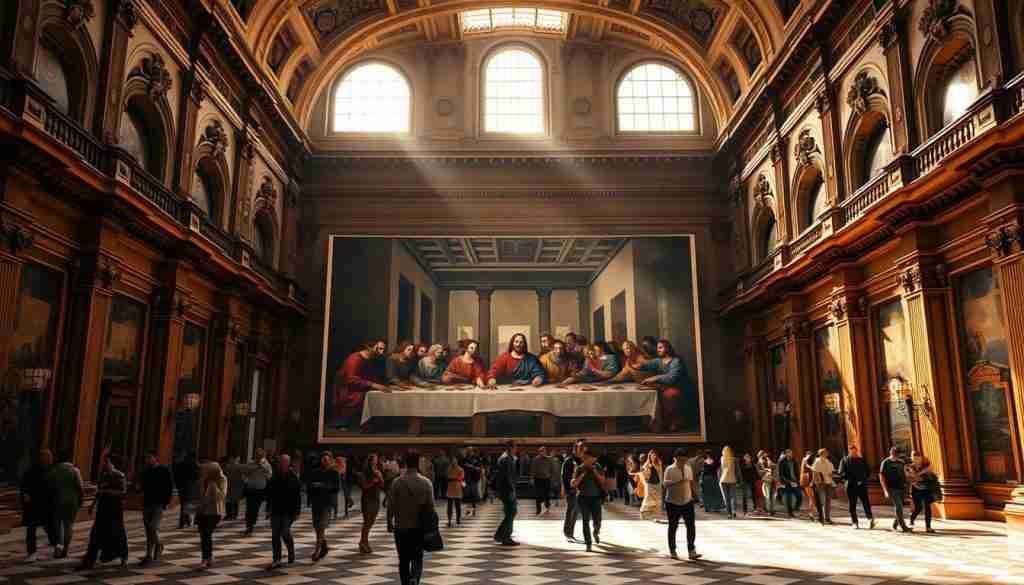
Highlights from Pinacoteca Brera and Poldi Pezzoli Museum
The Pinacoteca Brera transforms a 17th-century Jesuit college into a visual symphony of Italian art. Raphael’s Marriage of the Virgin shares walls with Caravaggio’s haunting Supper at Emmaus, while Mantegna’s dramatic foreshortening in The Dead Christ stops viewers mid-step.
Nearby, the Poldi Pezzoli Museum offers intimate encounters with Renaissance treasures. Visitors admire Botticelli’s Madonna and Child alongside medieval weaponry in rooms preserved as they appeared during the 1800s. “These spaces blur the line between museum and time capsule,” notes a cultural historian.
Experiencing the Last Supper and Duomo Museum
Leonardo’s Last Supper remains a pilgrimage site for art lovers. Advanced reservations grant 15-minute viewings of the fading fresco, where Christ’s emotional declaration still echoes across centuries.
“The genius lies in how Leonardo used perspective to pull viewers into the biblical drama,”
explains a local curator.
The Duomo Museum completes the cathedral experience with original spire statues and stained-glass designs. Interactive displays decode the marble labyrinth’s construction, revealing how 600 years of craftsmanship shaped Italy’s Gothic masterpiece.
Historic Culinary Journeys and Local Flavors
Flavors tell the story of a city shaped by trade routes and timeless traditions. At the heart of Lombard cuisine, saffron-infused risotto alla milanese glows like liquid gold – a dish perfected over six centuries. Nearby trattorias serve crispy cotoletta, a breaded veal cutlet that pairs perfectly with local Nebbiolo wines.
The aperitivo ritual transforms early evenings into social feasts. From 6-9 PM, bars offer lavish spreads of cured meats, risotto balls, and artisanal cheeses with every drink. This tradition reflects the Italian way of savoring life’s pleasures slowly.
For quick bites, pizza al taglio spots serve Roman-style slices with creative toppings. Historic Pasticceria Marchesi, operating since 1824, crafts panettone year-round – its citrus-kissed dough a sweet nod to local heritage. Food markets like Mercato di Via Fauche burst with seasonal truffles and aged Parmigiano.
Modern chefs reinterpret classics at Michelin-starred venues and cozy bacari wine bars. Cooking classes reveal secrets behind ossobino stews and sbrisolona crumble cakes. As one chef notes:
“Our recipes carry whispers from grandmothers’ kitchens and Milan’s merchant past.”
Navigating Milan: Transportation and Practical Tips
Efficient transit networks make exploring this Italian hub effortless. The city’s integrated system combines metro lines, trams, and buses, with single tickets valid for 90 minutes across all modes. Tourists often choose daily passes for unlimited rides – a cost-effective way to reach landmarks and hidden gems.
Central districts like Brera and Duomo are best explored on foot. For longer distances, the metro’s red line connects key areas swiftly. Regional trains link to Malpensa Airport in 50 minutes, while ride-sharing apps offer door-to-door convenience after dark.
Always validate paper tickets in yellow machines before boarding. Mobile apps like ATM Milano provide real-time updates – a smart way to avoid peak-hour crowds. Bike-sharing stations near parks give active travelers flexible sightseeing options.
Most signage appears in Italian and English, easing navigation. Accessible trams and metro stations accommodate wheelchairs, ensuring inclusive mobility. With these strategies, tourists can ride confidently through bustling piazzas and quiet cobblestone lanes alike.


