Italy’s northern treasure often flies under the radar for travelers focused on Rome or Venice. Yet this sophisticated metropolis rewards visitors with a seamless blend of Renaissance grandeur and modern elegance. From Gothic spires piercing azure skies to sleek design studios shaping global trends, every corner tells a story of innovation rooted in tradition.
Strategically positioned as Italy’s transport hub, the destination offers effortless connections to lakes, Alps, and Mediterranean coastlines. Its walkable center reveals architectural wonders like the Duomo di Milano alongside contemporary art spaces, all accessible via efficient trams and metro lines. Travelers appreciate how historic piazzas coexist with avant-garde galleries, creating dynamic contrasts.
Contrary to perceptions of exclusivity, the locale provides value through free museum Sundays and affordable aperitivo culture. Seasonal events—from fashion weeks to opera premieres—add layers of excitement without overwhelming crowds. Compact neighborhoods mean visitors can savor risotto alla Milanese at a family trattoria before admiring Da Vinci’s The Last Supper, all in one afternoon.
Key Takeaways
- Combines historic landmarks with modern design culture
- Central location enables easy day trips across Northern Italy
- Offers budget-friendly cultural access through strategic planning
- Walkable urban layout maximizes sightseeing efficiency
- Year-round events create unique immersion opportunities
Introduction to Milan City Breaks
Europe’s sleek cultural gateway reveals surprising accessibility for time-conscious explorers. Budget carriers from London and Manchester deliver visitors to this Italian metropolis in under two hours, while direct flights from New York and Chicago simplify transatlantic travel. Once landed, efficient rail links whisk arrivals downtown faster than it takes to sip a cappuccino.
The urban landscape masterfully balances eras. Gothic cathedrals tower beside minimalist showrooms, while tram bells echo past Michelin-starred trattorias. This fusion creates rich layers for discovery without exhausting distances—ideal for weekend itineraries. Art enthusiasts admire Brera’s Renaissance masters before sunset cocktails in Navigli’s canal district.
What sets this destination apart? Its dual identity as working city and cultural hub. Professionals in tailored suits mingle with gallery-hoppers near La Scala, offering glimpses of authentic Lombard life. First-time Italy visitors appreciate English-friendly signage and punctual transit—comforts that ease immersion into dolce vita rhythms.
Compact neighborhoods mean more experiences per square mile. Morning espresso at a 19th-century café precedes Da Vinci’s The Last Supper viewing, followed by designer outlet browsing. Evening brings golden-hour Duomo photography sessions and risotto tastings in Brera’s cobblestone lanes—all achievable without rushed logistics.
Why Milan is the Perfect Destination for a Quick Getaway
Sophisticated urban planning meets artistic legacy in a destination built for time-pressed explorers. Milano Centrale, Europe’s grandest railway hub, connects travelers to Venice, Florence, and Swiss Alps villages within hours. Three international airports—Malpensa, Linate, and Bergamo—offer flexible arrival options from major U.S. cities like New York and Chicago.
The historic center’s walkability transforms short stays into rich experiences. Visitors admire the Duomo’s spires by morning and browse designer boutiques by afternoon—all within a 2-mile radius. Efficient trams whisk explorers to Navigli’s canal-side aperitivo spots without wasting precious hours.
| Airport | Distance to Center | Transit Time | Key Airlines |
|---|---|---|---|
| Malpensa | 31 miles | 50 min train | Delta, United |
| Linate | 5 miles | 25 min bus | ITA Airways |
| Bergamo | 30 miles | 60 min shuttle | Ryanair, EasyJet |
Business-class infrastructure ensures smooth navigation for international visitors. English signage and contactless payment systems complement the metro’s user-friendly design. This fusion of efficiency and elegance lets travelers savor risotto alla Milanese rather than stress over logistics.
Compact neighborhoods adapt to unpredictable schedules. Rainy days simply shift focus from Sforza Castle’s courtyards to Galleria Vittorio Emanuele’s glass arcades. With 93% of top attractions accessible via 30-minute walks or transit rides, every moment becomes an opportunity for discovery.
Planning the Ultimate “milan city breaks” Experience
Crafting an unforgettable short trip requires balancing iconic sights with local charm. Selecting accommodation near the Duomo or Brera district creates a strategic base, placing visitors within walking distance of Renaissance masterpieces while maintaining metro access for broader exploration.
Visitors should prioritize reserving timed entry tickets for Leonardo’s The Last Supper 90 days ahead. This ensures access to one of art history’s most celebrated works while leaving flexibility for spontaneous discoveries in Navigli’s canal-side boutiques.
| Area | Walking Access | Transport Links | Vibe |
|---|---|---|---|
| Centro Storico | Duomo, Galleria | 3 metro lines | Historic core |
| Brera | Art museums | Tram 1, 4 | Bohemian chic |
| Navigli | Canals, nightlife | Metro M2 | Creative energy |
Spring and autumn visits maximize outdoor enjoyment, from Duomo rooftop tours to aperitivo along ancient waterways. Winter travelers gain exclusive access to La Scala’s opera season – pair velvet-curtain performances with hearty osso buco feasts.
A 48-hour pass for trams and buses (€8.25) offers unlimited rides between landmarks. Smart planners combine this with a Duomo Fast Track ticket to bypass queues, reclaiming precious time for designer outlet browsing or risotto tastings.
Getting to Milan: Airports, Trains, and Buses
Northern Italy’s transportation nexus welcomes visitors through three major airports and Europe’s second-busiest rail hub. Malpensa Airport handles most intercontinental flights, with direct seasonal services from New York and Chicago. Budget carriers like Ryanair dominate Bergamo’s operations, while Linate offers quick 25-minute bus rides to the historic core.
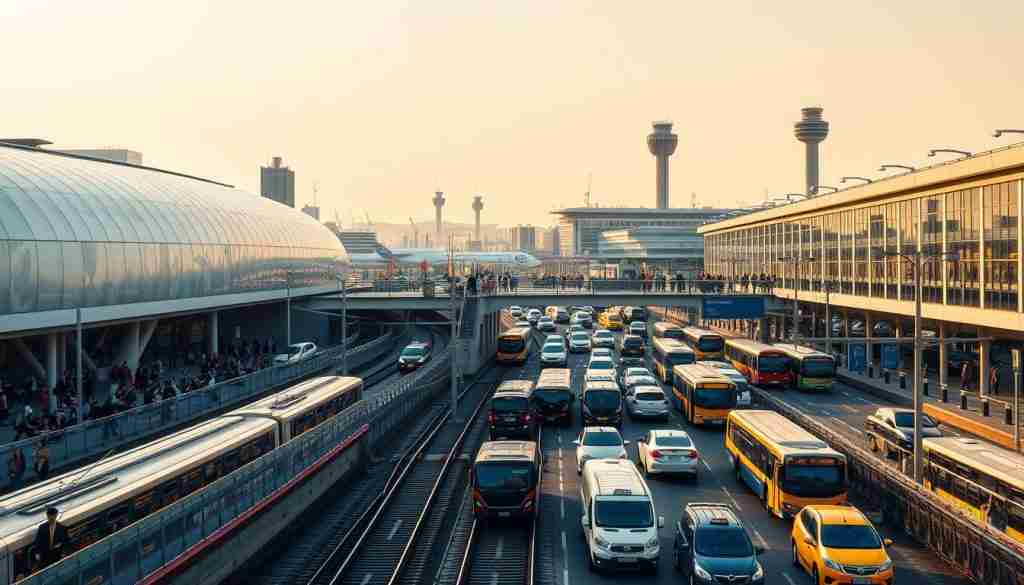
Ground connections balance speed and affordability. Malpensa’s express train reaches Cadorna train station in 50 minutes, while Bergamo’s Terravision buses deliver travelers downtown within 70 minutes. Linate’s proximity makes it ideal for last-minute arrivals—its ATM bus shuttles depart every 10 minutes during peak travel periods.
Milano Centrale’s marble-clad halls buzz with 320,000 daily passengers. High-speed Frecciarossa trains whisk visitors to Florence in 2 hours or Venice in 2.5, with onboard dining enhancing the journey. Night trains to Paris and Zurich transform transit into an adventure, featuring private cabins with panoramic windows.
Budget explorers leverage FlixBus networks connecting 255 destinations. These eco-friendly coaches offer reclining seats and Wi-Fi at 60% lower costs than rail alternatives. Smart planners often combine air arrivals with bus departures—a strategy that maximizes both time and savings.
Navigating Milan’s Public Transport and City Layout
This Italian metropolis simplifies exploration through its intuitive transit network. Four color-coded metro lines—red, green, yellow, and purple—interlace with vintage trams and modern buses, creating seamless access to every district. Tickets work across all modes, letting travelers switch from Duomo-bound trains to Brera-bound trams without extra costs.
Flexible fare options cater to diverse itineraries. The 90-minute single ticket (€2.20) permits unlimited transfers, while 24/48-hour passes (€7.60/€13) unlock stress-free hopping between landmarks. Payment modernizations allow contactless purchases at stations, though traditional tabaccherias with glowing “T” signs remain charming alternatives for paper tickets.
| Ticket Type | Duration | Price | Best For |
|---|---|---|---|
| Single Journey | 90 minutes | €2.20 | Short trips |
| 1-Day Pass | 24 hours | €7.60 | Active explorers |
| 2-Day Pass | 48 hours | €13.00 | Weekend visits |
Centered around the Gothic cathedral, the urban core radiates outward through distinct neighborhoods. Walkable zones like Brera and Porta Nuova connect via efficient trams, while Navigli’s canals lie just 15 minutes by metro. Visitors often pair morning strolls near La Scala with afternoon shopping in Quadrilatero della Moda—all easily reachable.
For panoramic orientation, hop-on buses offer narrated routes past major sites. These complement the user-friendly transit system, providing a relaxed way to absorb architectural marvels between metro adventures.
Iconic Landmarks: Duomo, Galleria Vittorio Emanuele II, and More
Architectural marvels define the soul of Italy’s fashion capital, blending spiritual grandeur with commercial brilliance. Two structures stand as timeless testaments to artistic ambition—the celestial Duomo cathedral and the glittering Galleria Vittorio Emanuele II arcade.
Cathedral of Stone and Sky
The Duomo di Milano astonishes with its 600-year construction saga. Visitors can:
- Marvel at 3,400 statues adorning the world’s largest Gothic facade
- Climb staircases past flying buttresses to rooftop panoramas (€8)
- Witness sunlight filtering through 55 stained-glass windows
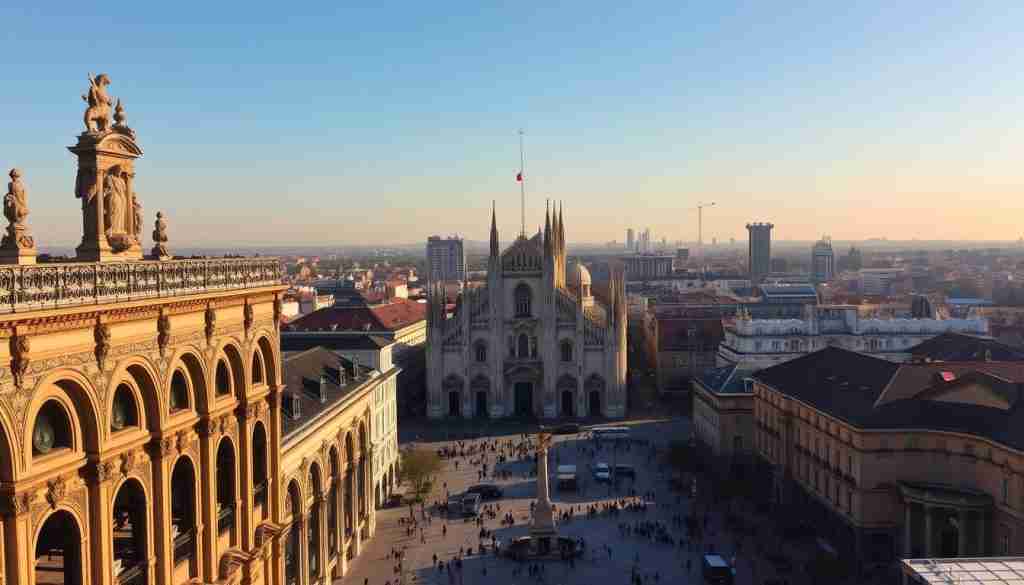
Morning explorers catch golden rays illuminating the marble spires. Below, Piazza del Duomo buzzes with street performers and espresso-sippers—a living postcard of Italian dolce vita.
Where Commerce Meets Artistry
Galleria Vittorio Emanuele II redefines luxury shopping through 19th-century splendor. This glass-vaulted arcade houses Prada’s flagship store beside cafes serving risotto since 1867. Don’t miss:
- The mosaic bull in the central octagon—spin three times for luck
- Dome reflections creating kaleidoscopic evening displays
- Hidden staircases leading to rooftop aperitivo terraces
Strategic visitors time their galleria strolls for sunset, when chandeliers cast warm glows over mosaic zodiac floors. This landmark proves why the city remains Europe’s unmatched blend of history and modernity.
Historical & Cultural Experiences in Milan
Stepping beyond fashion runways and design studios reveals a layered past etched into stone and canvas. Two landmarks stand as portals to different eras: one a fortress turned cultural treasury, the other a sacred space guarding Renaissance genius.
Visiting Sforza Castle and Santa Maria delle Grazie
Castello Sforzesco dominates the urban landscape with 15th-century ramparts that once protected dukes. Today, its courtyards buzz with free exploration opportunities. Visitors trace military history along defensive walls before discovering Michelangelo’s final sculpture in the museum complex.
| Site | Highlights | Access Tips |
|---|---|---|
| Sforza Castle | Michelangelo sculptures, frescoed halls | Free entry to grounds; €5 museum pass |
| Santa Maria delle Grazie | Da Vinci’s Last Supper | Book 3+ months ahead; 15-min timed entry |
The Church of Santa Maria delle Grazie offers a contrasting experience. Its red-brick facade conceals Leonardo’s faded masterpiece, preserved through strict humidity controls. As art historian Bernard Berenson noted: “No reproduction captures the psychological intensity of Christ’s final moments with his disciples.”
For quieter encounters, Santa Maria presso San Satiro astonishes with Bramante’s optical illusion choir—a 3D masterpiece in 2D space. These sights collectively map the city’s journey from medieval stronghold to creative incubator.
Morning visits to both sites avoid crowds, letting travelers absorb details often missed in rushed tours. Pair explorations with traditional osso buco lunches in nearby Brera to complete the cultural immersion.
Curating a 2-Day Itinerary in Milan
Two days in Italy’s fashion capital unveil Renaissance treasures alongside modern marvels, perfect for travelers craving depth without sacrificing leisure. The first day immerses visitors in architectural wonders and artistic legacy, while strategic timing ensures crowd-free exploration of iconic landmarks.
Day 1: Historic and Iconic Sights
Begin at the Duomo di Milano as morning light gilds its marble facade. Reserve 8:00 AM tickets to ascend terraces before crowds arrive—rewarding early risers with unobstructed Alps views. Descend to Galleria Vittorio Emanuele II, where mosaic floors sparkle beneath Europe’s oldest shopping arcade.
Afternoon calls for cultural immersion at Sforza Castle. Walk fortified ramparts before exploring Michelangelo’s final sculpture in the museum. Pair this with a tram ride to Brera District, where cobblestone alleys hide artisan workshops and frescoed churches.
Evening unfolds along Navigli’s canals. Sunset aperitivo sessions here blend historic charm with contemporary energy—sip Aperol spritzes beside 15th-century waterways. Smart planners book dinner at family-run trattorias serving saffron risotto, a local specialty since the Renaissance.
This curated route balances must-see sites with hidden gems, proving even brief visits can capture Northern Italy’s essence. Day two shifts focus to design studios and fashion districts, creating a harmonious blend of past and present.


