Northern Italy’s bustling cultural hub offers a culinary journey unlike any other. While often overshadowed by Rome or Florence, this destination surprises travelers with its rich gastronomic traditions shaped by fertile farmlands and centuries of global influences. From creamy risottos born in Europe’s rice bowl to golden panettone with royal roots, every dish tells a story of heritage and innovation.
The region’s agricultural heartland provides chefs with exceptional local ingredients. Seasonal produce and time-honored recipes form the foundation of meals here. Hearty polenta and saffron-infused specialties reflect both peasant traditions and aristocratic tastes, creating a dining culture that values substance over pretense.
Modern establishments skillfully blend old-world techniques with global inspiration. Visitors can savor authentic flavors in cozy trattorias or experience cutting-edge creativity at award-winning venues. This balance between preservation and evolution makes the city’s culinary landscape endlessly captivating for curious travelers.
Key Takeaways
- Northern Italy’s underrated culinary capital combines rural traditions with international influences
- Signature rice dishes originate from Europe’s most productive agricultural valley
- Historic Spanish and Austrian impacts created unique flavor fusions
- Dining options range from family-run eateries to Michelin-starred venues
- Seasonal, locally sourced ingredients define authentic flavor profiles
- Comfort-focused recipes showcase simplicity and rich textures
Introduction: Discovering Milan’s Culinary Heritage
A crossroads of cultures, this northern Italian hub crafts its identity through both rustic traditions and cosmopolitan innovation. While overshadowed by flashier destinations, the city quietly nurtures a gastronomic legacy shaped by farmers, nobles, and global influences. Its position at Europe’s cultural intersection birthed a cuisine where Alpine simplicity meets imperial grandeur.
Why This City Remains Italy’s Best-Kept Secret
Many travelers overlook Lombardy’s capital when planning culinary pilgrimages. Yet local chefs have perfected timeless recipes like golden saffron risotto and breaded veal cutlets for generations. Centuries of Spanish and Austrian rule left their mark through rich stews and buttery pastries, creating flavors distinct from southern Italy’s tomato-centric dishes.
Bridging Centuries Through Flavor
Today’s dining scene honors heritage while embracing creativity. Family-run osterias simmer cassoeula (pork and cabbage stew) beside sleek bistros reinventing ossobuco with molecular techniques. The fertile Po Valley supplies premium rice and seasonal produce, ensuring even modern dishes retain deep agricultural roots. This harmonious blend of old and new makes every meal a historical journey.
Top Restaurants and Cafes in Milan
The city’s dining scene offers a mosaic of flavors, where historic recipes meet modern creativity. From cozy trattorias to Michelin-starred venues, each spot presents a unique take on Lombardy’s culinary traditions. Travelers find both time-honored classics and innovative dishes across diverse neighborhoods.
| Restaurant | Specialty | Price Range | Location |
|---|---|---|---|
| L’immagine Bistrot | Osso buco with saffron risotto | €20-€40 | Cagnola |
| Ribot | Beef tagliata | €30-€50 | San Siro |
| Trattoria de la Trebia | Florentine T-bone steak | €20-€40 | Porta Romana |
| Joia | Plant-based tasting menus | €100-€150 | Porta Nuova |
| Langosteria | Grilled king crab | €100-€150 | Porta Genova |
Local Favorites: From Risotto to Veal Specialties
L’immagine Bistrot charms visitors with vaulted ceilings and wooden accents. Their signature osso buco melts over creamy risotto, honoring Lombardy’s agricultural roots. Nearby, Ribot Restaurant pairs equestrian decor with Florentine-inspired beef tagliata.
Meat lovers flock to Trattoria de la Trebia for steaks seared to perfection. The sizzling T-bone showcases generations of grilling expertise. Each place maintains authenticity through family recipes and regional ingredients.
Hidden Gems and Iconic Dining Experiences
Joia redefines fine dining with vibrant plant-based menus. Their artichoke carpaccio proves vegetarian cuisine deserves Michelin recognition. For seafood enthusiasts, Langosteria delivers oceanic luxury through expertly grilled crustaceans.
These establishments span from accessible trattorias to lavish venues. Whether craving rustic comfort or avant-garde plates, every meal becomes a cultural discovery. The city’s culinary map invites exploration across its historic districts.
Authentic Milan Food and Dining Experiences
Northern Italy’s gastronomic capital reveals its soul through iconic plates that connect modern diners to Renaissance artisans. Four centuries of culinary evolution shine in every bite of golden saffron rice and crisp breaded cutlets.
Savoring Regional Specialties
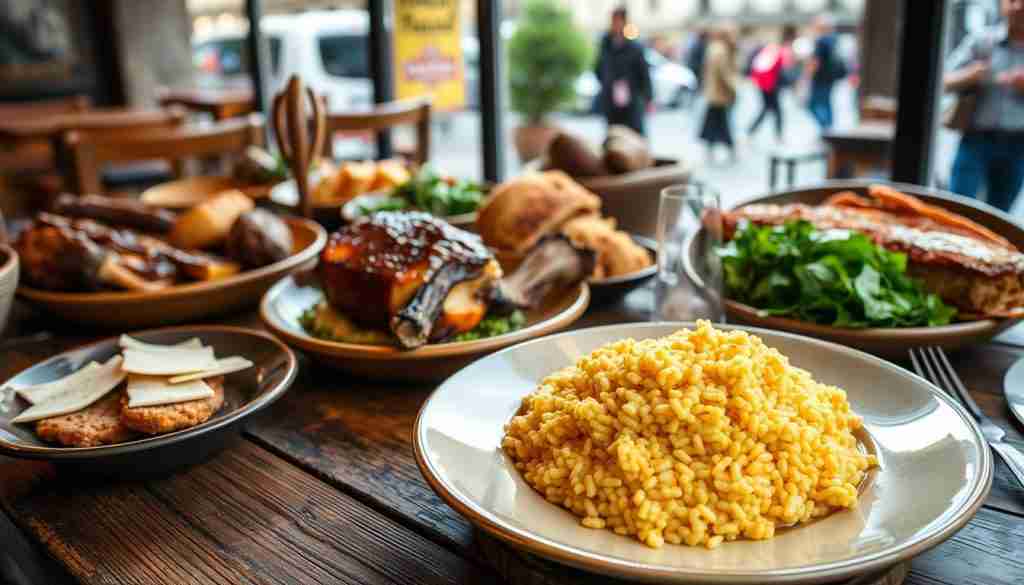
Risotto alla Milanese remains the ultimate test of a chef’s skill. The 1574 invention combines Carnaroli rice with saffron-infused broth, stirred precisely to release starches. Bone marrow and Parmigiano create velvety richness in this golden dish that pairs perfectly with ossobuco.
| Dish | Key Ingredients | Preparation Time | Origin Story |
|---|---|---|---|
| Cotoletta | Veal loin, eggs, breadcrumbs | 25 mins | 19th-century Austrian influence |
| Ossobuco | Veal shank, marrow bone | 3 hours | Farmers’ slow-cooked tradition |
| Mondeghili | Leftover meat, cheese, bread | 35 mins | Post-war resourcefulness |
Contemporary Interpretations
Modern chefs reimagine classics while respecting foundations. Crispy cotoletta appears as sliders with lemon aioli. Ossobuco gets deconstructed into ravioli filling, its marrow sauce drizzled tableside. Even humble meatballs transform into gourmet bites with truffle shavings.
These dishes showcase how tradition adapts without losing essence. From family kitchens to Michelin stars, each recipe carries stories of innovation across generations.
A Taste of Tradition & Innovation in Italian Cuisine
Culinary artistry thrives where time-honored techniques meet bold reinvention. Northern Italy’s gastronomic scene preserves centuries-old methods while embracing contemporary creativity, offering diners both comfort and surprise.

Curated List of Must-Try Dishes and Recipes
Panettone stands as a golden masterpiece of pastry craft. This towering bread-like cake requires three days of fermentation, creating its signature airy texture bursting with candied citrus. Artisan bakers guard their starter doughs like family heirlooms.
Michetta’s crisp shell reveals an interior perfect for stuffing with cured meats and creamy cheese. Originally adapted from Austrian rolls, this star-shaped bread became a lunchtime staple. Its hollow center cradles flavors without overwhelming the palate.
Winter brings cassoeula – a pork stew transforming humble cuts into rich flavor explosions. Chefs slow-cook seven different pig parts with Savoy cabbage, creating a dish that warms both body and soul.
Modern Twists on Classic Milanese Recipes
Innovative chefs reimagine minestrone by swapping pasta for carnaroli rice, celebrating local agriculture. Summer versions serve it chilled with edible flowers, while winter iterations feature truffle oil drizzle.
Piadina flatbreads now showcase premium fillings like burrata and bresaola. Street vendors elevate this Emilia-Romagna import with nduja spread and pickled vegetables, creating portable flavor symphonies.
Even classic cotoletta gets updates. Thin-cut veal arrives as sliders with saffron aioli, while vegetarian versions use fried porcini mushrooms. These dishes honor tradition while courting modern taste preferences.
Conclusion
The culinary heartbeat of Lombardy’s capital pulses through generations of artisans and modern visionaries. Family-run trattorias like Trattoria Masuelli San Marco, operating since 1921, preserve recipes that have graced tables for a century. Meanwhile, spots like Ratanà reimagine classics with seasonal twists, proving tradition evolves without losing its soul.
Whether savoring ossobuco at a candlelit osteria or tasting deconstructed risotto at a sleek bistro, every meal tells a story. Chefs source premium ingredients from Lombardy’s farmlands – think saffron-kissed rice and tender veal cuts – ensuring even avant-garde plates stay rooted in local terroir.
Osteria del Treno’s mondeghili meatballs and Panificio Davide Longoni’s crusty michetta bread showcase how humble dishes become cultural icons. Pair these with regional wines like Nebbiolo or crisp Lugana whites for authentic flavor pairings.
From shared tables in historic eateries to chef’s counters presenting edible art, the city’s dining scene rewards curious palates. It’s not just about sustenance – each bite connects travelers to centuries of craftsmanship and tomorrow’s culinary innovations.


