Nestled in Lombardy, the captivating city of Mantua offers a journey through time. Surrounded by three serene artificial lakes, this historic gem boasts a legacy spanning over 4,000 years. It’s a remarkable destination where Renaissance art and architecture create an intimate atmosphere far from the usual tourist trails.
Our guide is designed to help you uncover the very best this city has to offer. From the magnificent palaces commissioned by the powerful Gonzaga family to the flavors that earned it the title of European Capital of Gastronomy, we provide a comprehensive look. You will discover a place where every corner tells a story.
Mantua’s old town is a UNESCO World Heritage site, a testament to its immense cultural value. This guide will illuminate the artistic masterpieces and hidden courtyards that make a visit so rewarding. We focus on the essential experiences that blend deep history with authentic local life.
Prepare to explore architectural wonders and savor culinary traditions. We reveal the things that transform a trip to this Lombardy jewel into an unforgettable experience. Let us be your expert companion on a journey to one of Italy’s most enchanting destinations.
Key Takeaways
- Mantua is a historic city in northern Italy, surrounded by lakes and recognized as a UNESCO World Heritage site.
- The city offers a rich Renaissance heritage, largely shaped by the influential Gonzaga family.
- It provides an authentic Italian experience away from large crowds of tourists.
- Mantua has been honored as both the Italian Capital of Culture and European Capital of Gastronomy.
- This guide serves as a comprehensive resource for planning a culturally immersive visit.
- The destination combines artistic treasures with scenic beauty and exceptional local cuisine.
Introduction to Mantua’s Historic Charm
The unique character of this remarkable city is deeply rooted in its extraordinary past and its distinctive geographical setting. Its history is not just a footnote but the very foundation of its identity.
Historical Highlights of this UNESCO Gem
Mantua’s story spans over four thousand years, with origins dating to around 2000 BC. This long timeline saw Etruscan settlements and Roman occupation before the Gonzaga family shaped its destiny.
Their rule for nearly four centuries transformed the city into a celebrated Renaissance hub. They sponsored great artists, leaving an artistic legacy that secured its UNESCO status in 2008.
Unique Local Architecture and Scenic Lakes
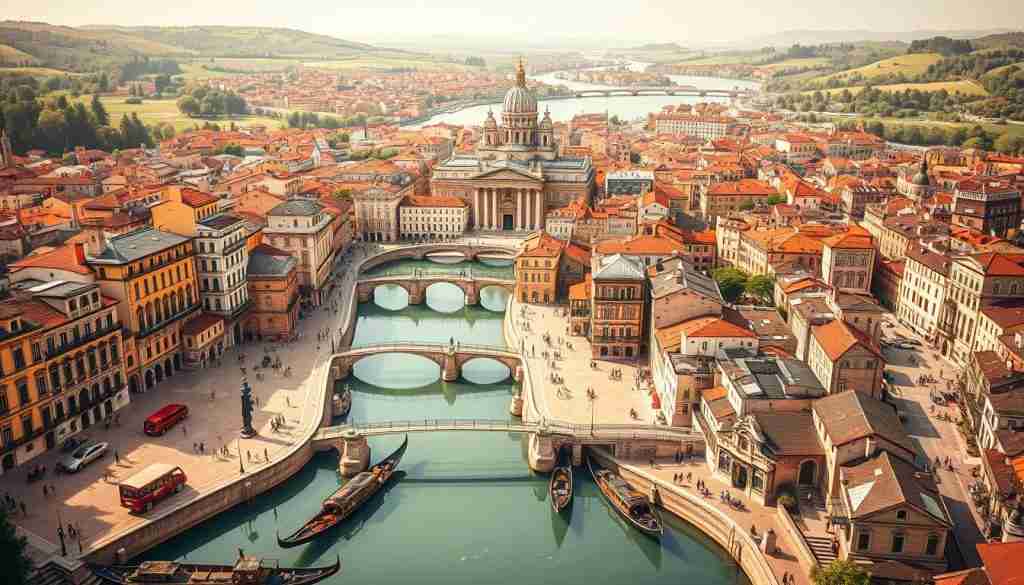
The city’s architecture is a harmonious blend of Renaissance palaces, Romanesque churches, and medieval towers. Each building adds a layer to the visual story.
This urban landscape is beautifully framed by three artificial lakes. Created in the 12th century, these waters once served as a brilliant defensive moat.
Today, they provide a serene backdrop, enhancing the authentic atmosphere that makes a visit so special. This blend of deep history and natural beauty is what defines the city.
Discover Top Attractions in Mantua
The heart of Mantua reveals its artistic wealth within a remarkably compact and pedestrian-friendly historic core. This efficient layout allows visitors to experience a profound concentration of culture without the fatigue of long commutes between sites.
Most key landmarks are situated within easy walking distance of one another. This creates an ideal environment for exploration. Visitors can comfortably cover the essential highlights of the city in a single, well-planned day.
Overview of Must-See Sites
For a more relaxed pace, a two-day visit is highly recommended. This allows ample time to appreciate the masterpieces and soak in the authentic atmosphere. The main places of interest radiate from two central squares.
Piazza Sordello, with its grand Ducal Palace and cathedral, offers a regal introduction. Piazza delle Erbe provides a vibrant, historic setting with its ancient clock tower and café culture. These squares serve as perfect starting points for discovery.
Between them, travelers find an extraordinary collection of Renaissance palaces, intimate medieval churches, and theatrical spaces. This city center is a treasure trove where every corner holds a new masterpiece. It is an exceptional destination for those seeking deep cultural immersion at a leisurely pace.
Must See Renaissance Palaces and Landmarks
Among Mantua’s architectural treasures, two Renaissance palaces stand as monumental testaments to the Gonzaga family’s legacy. These spectacular buildings represent different facets of Renaissance life—power and pleasure.
Ducale Palace and Camera degli Sposi
The enormous ducal palace complex contains over 1,000 rooms, making it one of Italy’s largest museums. This was the main residence of the ruling Gonzaga family for centuries.
Its absolute masterpiece is the Camera degli Sposi, where Andrea Mantegna created revolutionary frescoes. The famous ceiling oculus features painted figures seeming to gaze down from a balcony.
Visitors can explore diverse spaces from the 14th-century Castello di San Giorgio to Isabella d’Este’s apartments. The sheer scale means planning several hours for proper appreciation.
Te Palace and its Mythological Frescoes
Palazzo Te offers a completely different Renaissance experience. Built in the 16th century as a leisure villa, its rooms explode with mythological drama.
Giulio Romano’s Chamber of the Giants creates an immersive environment where frescoes cover every surface. The Room of Psyche and Hall of Horses showcase equally spectacular art.
After admiring the interior art, visitors can stroll through the beautiful gardens with hidden grottos. This palace provides a more compact but equally impressive visit.
Immersing Yourself in Mantua’s Cultural Heritage
Mantua’s sacred spaces reveal layers of history through contrasting architectural styles that have endured through time. These religious landmarks offer intimate encounters with the city’s spiritual legacy.
Basilica di Sant’Andrea and its Artistry
The Basilica di Sant’Andrea represents Renaissance perfection. Designed by Leon Battista Alberti in the 15th century, this church showcases harmonious classical proportions.
Its barrel-vaulted interior creates a soaring space for contemplation. The Basilica Sant’Andrea houses Christianity’s precious Blood relic, visible only on Good Friday.
Six chapels display art by Andrea Mantegna and his students. This Sant’Andrea masterpiece welcomes visitors freely for personal reflection.

Rotonda di San Lorenzo: A Journey through Time
The Rotonda di San Lorenzo offers a completely different experience. Built in the 11th century, this circular church is Mantua’s oldest.
Its unique architecture was inspired by Jerusalem’s Holy Sepulchre. The Rotonda San Lorenzo features thick stone walls and small windows.
Restoration revealed its original 11th century character. Ancient frescoes remain visible, connecting visitors across time. The San Lorenzo church requires only a small donation for entry.
Both the Basilica Sant’ and Rotonda San provide accessible spiritual encounters. They represent different eras of sacred architecture in one remarkable city.
Savoring the Culinary Delights of Mantua
Mantua’s recognition as European Capital of Gastronomy signals a culinary tradition worthy of its Renaissance heritage. The local cuisine reflects both agricultural abundance and sophisticated court traditions.
Visitors can experience flavors that have delighted generations of Mantuan family tables. This region offers a remarkable journey through Italy’s culinary landscape.
Traditional Dishes: Pumpkin Tortelli and More
Tortelli di Zucca stands as the signature pasta dish. This delicate pumpkin-filled creation represents the perfect marriage of sweet and savory flavors.
Autumn visits reveal the dish at its peak, using locally grown pumpkins. Other essential specialties include Bigoli con le Sardelle and Risotto alla Pilota.
Salame Mantovano offers a slightly sweet local salami perfect for antipasti. These dishes showcase why this place deserves its gastronomic reputation.
Best Cafés and Local Bakeries
Mantua’s dessert tradition features elegant Torta Elvezia and rustic Sbrisolona. Local bakeries like Casa del Pane preserve these time-honored recipes.
For a complete culinary day, consider this dining guide:
| Establishment Type | Atmosphere | Signature Dish | Price Range |
|---|---|---|---|
| Michelin Guide Restaurant | Fine Dining | Modern Local Cuisine | $$$ |
| Traditional Osteria | Rustic Warmth | Pumpkin Tortelli Pasta | $$ |
| Artisanal Gelateria | Casual Sweet Treat | Seasonal Gelato | $ |
| Local Pasticceria | Morning Café | Sbrisolona Cake | $ |
The surrounding Lombardy wine country provides perfect pairings for these culinary experiences. Many restaurants offer excellent local selections.
Practical Tips for Your Short Stay in Mantua
Getting to and navigating this Lombardy jewel is surprisingly straightforward, thanks to its excellent regional connections. Our guide ensures your visit is as smooth as the city’s famous pumpkin tortelli.
With strategic planning, you can immerse yourself fully in the cultural riches without logistical stress. We provide the essential insights for a perfect trip.
How to Get There and Navigate the City
Mantua is well-served by regional trains, making it an ideal day trip from Verona (45 minutes) or a stop on a broader northern Italy itinerary. The station is a mere 10-minute walk from the historic center.
For the best fares, book tickets a few weeks in advance using the Italian name “Mantova” on Trenitalia.com. The compact layout means once you arrive, your feet are the best way to explore.
Most key attractions lie within a 20-minute radius. Renting a bike offers a delightful way to see the city and its beautiful lakeside paths like a local.
Time Management and Itinerary Suggestions
While one day is enough for the main highlights, two days allow a more relaxed pace to savor the atmosphere and local cuisine. Spring and fall offer the most comfortable weather for exploring.
A well-structured one-day itinerary maximizes your time. Start with the grand palaces in the morning. Explore piazzas and churches in the afternoon. Conclude with a sunset walk around the serene lakes.
The Mantua City Card is a smart investment at €25. It provides entry to 12 sites, including the major palaces, and pays for itself quickly. This city in the Lombardy region rewards thoughtful planning with an unforgettable experience.
Additional Hidden Gems and Local Experiences
The true rhythm of Mantua reveals itself in its public squares, where past and present seamlessly intertwine. These spaces offer intimate encounters with local life beyond the major landmarks.
Exploring Local Markets and Quiet Corners
Piazza Sordello showcases layers of history from Roman mosaics to medieval justice. The Torre della Gabbia tower once displayed prisoners in a suspended cage.
Nearby, Piazza delle Erbe bursts with morning market activity. The 15th-century Astronomical Clock Tower still tracks celestial movements above vibrant café scenes.
Cultural treasures like Teatro Bibiena offer Baroque intimacy where Mozart performed at thirteen. The National Archaeological Museum houses the poignant 6,000-year-old Lovers of Valdaro.
Day Trips and Scenic Outdoors by the Lakes
Mantua’s three lakes provide serene escapes for walking and cycling. Lotus flowers and swans create exotic scenery, especially at sunset.
The Mincio cycle path extends 44 kilometers to Lake Garda through flat countryside. This leisurely day trip reveals changing landscapes and charming villages.
Nearby places like Sabbioneta showcase perfect Renaissance planning. Borghetto sul Mincio offers medieval charm with waterwheel-lined canals.
Our recommendations include wine tours in the surrounding Lombardy region. These experiences complement cultural exploration with agricultural traditions.
Conclusion
Mantua ultimately delivers what many travelers seek but rarely find: authentic Renaissance experiences without modern tourist crowds. This remarkable city packs centuries of artistic heritage into a compact, walkable center.
From the thousand rooms of the Ducal Palace to intimate medieval churches, the concentration of treasures is extraordinary. The Gonzaga family’s vision created a cultural home where art and architecture flourish.
Whether you spend one or several days exploring, every moment rewards you with profound cultural immersion. The city’s human scale allows intimate encounters with history that larger destinations cannot offer.
Mantua represents the essence of Renaissance Italy, preserved for today’s travelers. It’s a place where all the best things about Italian culture converge beautifully.
Our guide ensures you’ll discover why this UNESCO gem deserves a prominent spot on any Italian itinerary. The experience will leave you enriched by this extraordinary city’s timeless charm.


