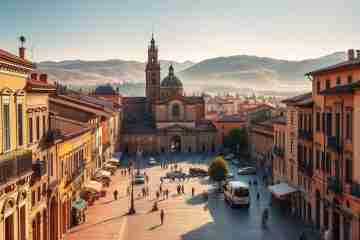
Just a short journey south of Milan lies a captivating destination often overlooked by travelers. This historic city offers a peaceful retreat from the bustle of its famous neighbor. A quick train ride, taking less than an hour, transports visitors to a place rich with centuries of history.
Once the capital of Lombard Italy, this location witnessed the coronation of King Frederick Barbarossa. Its story is etched into the very stones of its ancient university, founded in 1361. Visitors can walk through time along quiet, tree-lined squares and discover Romanesque churches and a majestic castle.
The way of life here is authentically Italian, blending scholarly energy with a relaxed provincial pace. It’s a highly walkable city, where every corner reveals a new treasure. From the stunning Certosa di Pavia abbey to vibrant aperitivo scenes, it provides an ideal base for discovering Lombardy’s charms.
This guide will unveil the hidden gems and practical tips for making the most of a visit to this remarkable city.
Key Takeaways
- Pavia is a historic city located just 35 km south of Milan, easily accessible by a short train ride.
- It served as the capital of Lombard Italy and is home to one of Europe’s oldest universities.
- The city is renowned for its walkable center, featuring Romanesque architecture and medieval towers.
- It offers a more affordable and tranquil alternative to Milan while providing rich cultural experiences.
- Key attractions include the Certosa di Pavia abbey, a Visconti castle, and lively local piazzas.
- The atmosphere uniquely combines student vitality with the authentic rhythm of Italian provincial life.
Unveiling Pavia’s Rich History & Cultural Tapestry
As the former capital of the Lombard Kingdom, this destination boasts a heritage spanning multiple eras. The city’s strategic location along the Ticino River made it a crucial crossroads throughout the centuries.
A Glimpse into Medieval Times
During the medieval period, the cityscape featured over 150 defensive towers. These structures symbolized wealthy families’ power and rivalries. Like San Gimignano, they created a dramatic skyline.
Frederick Barbarossa’s coronation here in 1155 cemented the city’s importance. This event elevated its status among Italian medieval cities. It represented royal power during turbulent times.
Celebrating the Evolution of Pavia
The city’s evolution reflects continuous development across centuries. From Roman settlement to Lombard capital, each era contributed architectural treasures. The Renaissance brought academic prestige that shapes modern life.
“The stones of Pavia whisper stories from a thousand years of European history, where every corner reveals another chapter in Italy’s rich tapestry.”
Today, medieval streets coexist with Renaissance palaces. This creates an immersive journey through time. Visitors experience multiple centuries within a compact, walkable area.
| Historical Period | Key Development | Lasting Legacy |
|---|---|---|
| Roman Era | Strategic settlement | Urban foundation |
| Lombard Kingdom | Political capital | Royal significance |
| Medieval Peak | 150+ towers built | Architectural heritage |
| Renaissance | University establishment | Academic tradition |
The city’s proud past continues to influence its identity. Respect for tradition blends with contemporary energy. This makes Pavia one of Italy’s most fascinating historical destinations.
Discovering Architectural Marvels in Pavia
The architectural landscape of this Lombard city presents a remarkable journey through centuries of design and devotion. Its skyline tells a story of artistic ambition, from the soaring dome of the cathedral to the robust towers of medieval families.
Romanesque Churches & Gothic Domes
The Basilica of San Michele Maggiore stands as a masterpiece of Lombard-Romanesque architecture. Its honey-colored stone façade features intricate biblical carvings from the 11th-12th century.
The Duomo di Pavia boasts Italy’s third-largest dome, a design influenced by Renaissance genius. This monumental space took centuries to complete, yet it dominates the city center with undeniable grandeur.
Santa Maria del Carmine showcases elegant Lombard Gothic architecture. Its striking rose window and pointed arches demonstrate a distinctive adaptation of Gothic principles using local brick.
Medieval Towers and the Covered Bridge
About a dozen medieval towers remain from an original 150. These 11th-12th century buildings once symbolized powerful families. They now create dramatic vertical accents against the sky.
The city’s characteristic brick construction gives it a warm, earthy palette. Red and brown surfaces glow golden in the late afternoon sun, adding to the visual charm of the historic buildings.
The reconstructed Ponte Coperto spans the Ticino River. This covered bridge, faithfully rebuilt after WWII, preserves its medieval character and includes a small chapel. It remains an iconic part of the city’s architecture.
Exploring Pavia Italy: Neighborhoods, Streets, and Bridges
Wandering through the city’s neighborhoods offers an intimate glimpse into daily Italian life beyond the main attractions. The historic center unfolds like a living museum where medieval planning meets contemporary vitality.
Navigating the Historic Center
Strada Nuova serves as the main artery connecting the train station to the heart of the town. This elegant boulevard features boutique shops and cafés beneath the watchful gaze of ancient towers.
Piazza della Vittoria forms the social hub of the city. Here, the Duomo and Broletto create a stunning backdrop for aperitivo hour. Locals gather in this stone-paved square throughout the day.
The iconic Ponte Coperto spans the Ticino River with distinctive red-brick arches. This covered bridge includes a small chapel at its midpoint, offering panoramic views.
Crossing to the opposite side reveals Borgo Ticino, a quieter area with flower-draped homes and family-run osterie. Narrow streets here lead to peaceful riverside paths along the Ticino River.
The network of medieval streets throughout the center invites leisurely exploration. Each turn reveals hidden squares with shaded benches perfect for contemplation.
| Neighborhood Area | Key Characteristics | Visitor Experience |
|---|---|---|
| Historic Center | Medieval streets, main piazza | Cultural immersion, shopping |
| Strada Nuova | Main thoroughfare, elegant façades | Easy navigation, café culture |
| Borgo Ticino | Riverside district, traditional osterie | Relaxed pace, local dining |
| Ponte Coperto Area | Bridge connections, river views | Photography, scenic walks |
Our recommended walking route incorporates these diverse streets and districts. This approach maximizes architectural discoveries while capturing the authentic rhythm of Italian provincial life.
University Legacy and Courtyards: Life in Pavia
A vibrant academic energy permeates the ancient city, stemming from its prestigious university legacy. The Università degli Studi di Pavia stands as one of the oldest institutions of higher learning in Europe.
Exploring the Ancient University Campus
Founded in 1361, this university has operated for over seven centuries. It represents one of the oldest continuously functioning academic institutions worldwide.
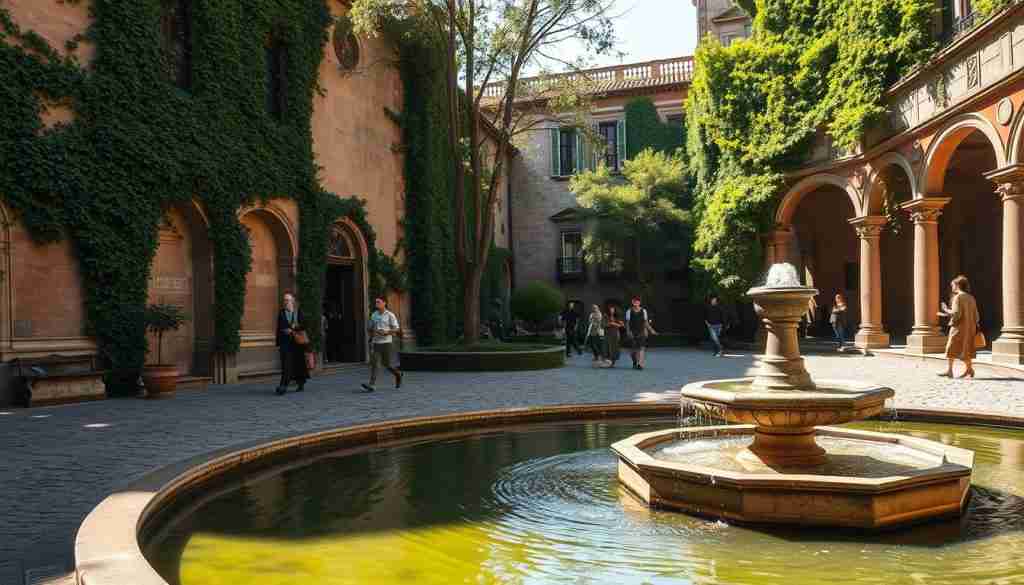
The campus features a maze of elegant courtyards along Strada Nuova. These spaces reveal Renaissance arcades and weathered stone staircases. They have witnessed centuries of scholarly life and intellectual pursuit.
Scientific pioneer Alessandro Volta conducted groundbreaking research here. His work on electricity revolutionized science and demonstrated the university’s global impact.
Hidden Museums and Serene Courtyards
The magnificent Aula Magna ceremonial hall showcases soaring ceilings and ornate chandeliers. Generations of students have worn smooth the wooden desks over centuries.
Specialized museums like the University History Museum document the institution’s role in scientific discovery. Collections span medical advancement and cultural development across seven centuries.
Student life injects youthful energy into historic streets without overwhelming the city’s character. The university maintains a perfect balance between academic vitality and provincial charm.
Visitors can wander through publicly accessible courtyards. These serene spaces connect travelers to centuries of scholarly pursuit and intellectual achievement.
Culinary Delights and Local Traditions in Pavia
The culinary landscape of this Lombard gem tells a story of resourcefulness and royal encounters. Local traditions blend cucina povera peasant cooking with refined techniques from centuries of cultural exchange.
Zuppa Pavese and Authentic Flavors
Legend claims French King Francis I received Zuppa Pavese after a battlefield defeat. A peasant woman created this signature dish using humble ingredients she had at home.
She fried bread in butter, topped it with egg and cheese, then poured boiling broth over it. This simple yet satisfying lunch became famous throughout Italy during the 1970s and 1980s.
Another unique tradition involves frogs from surrounding rice paddies. They appear in Risotto alla Certosina with lake fish or served deep-fried. This showcases the region’s agricultural abundance.
“The true taste of this place emerges through generations-old recipes that transform local ingredients into culinary poetry.”
Family-run establishments like Trattoria Da Carlo serve generous portions of classic dishes. Their restaurant exemplifies the kind of authentic cooking that makes Italian cuisine legendary.
For a distinctive dining experience, La Torre degli Aquila Osteria con cucina operates inside a medieval tower. This place combines architectural heritage with traditional flavors.
| Restaurant | Specialty | Atmosphere | Ideal For |
|---|---|---|---|
| La Torre degli Aquila | Traditional cuisine | Medieval tower setting | Unique dining experience |
| Antica Trattoria Ferrari | Ravioli di brasato | Countryside location | Wine pairings |
| Peo Bistrot | Modern interpretations | Contemporary design | Innovative cuisine |
| Il Broletto | Aperitivo culture | Piazza setting | People-watching |
Modern alternatives like Peo Bistrot offer innovative cooking while maintaining local flavors. The city balances tradition with contemporary creativity across its dining scene.
For lunch or evening drinks, Il Broletto in Piazza della Vittoria provides the perfect spot. This kind of social gathering transforms meals into community celebrations.
Travel Tips for Getting Around and Staying in Pavia
Planning your journey to this Lombard treasure requires practical insights into transportation and accommodations that enhance the travel experience. Understanding the logistics ensures a smooth visit to this historic destination.
Train and Car Travel Essentials
Reaching the city is remarkably convenient by train. Frequent service connects Milan to the local station in just 30-42 minutes. This affordable trip costs under 5 euros, making it an ideal day excursion.
Drivers can take the A7 Autostrada toward Genoa, exiting at Bereguardo. The scenic SS35 provincial road offers an alternative way that passes the magnificent Certosa monastery.
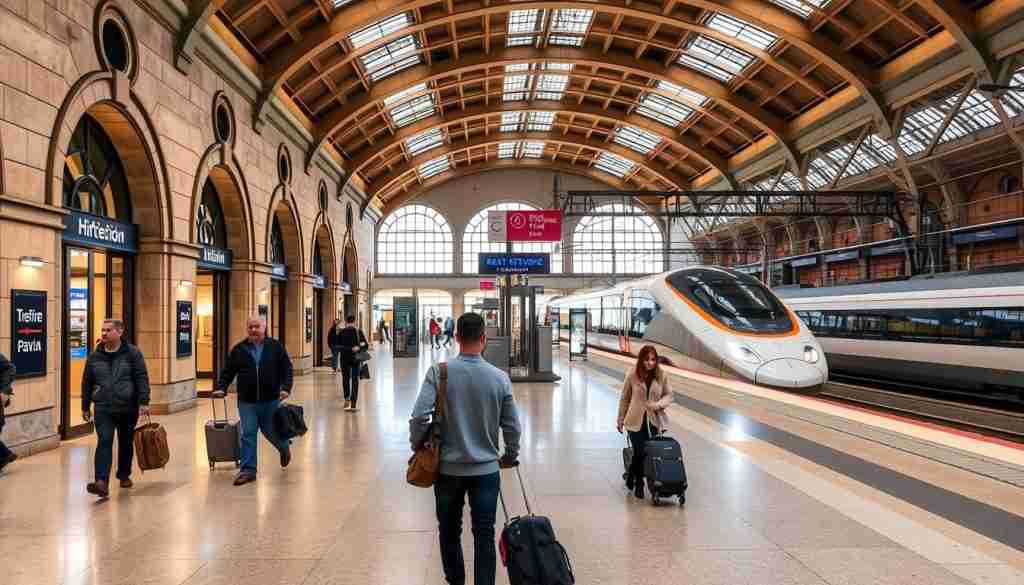
The compact historic center makes exploration on foot effortless. The train station sits just 500 meters from the tourist office, ensuring quick orientation upon arrival.
Top Local Lodgings and Guided Tours
Spending 1-2 days allows thorough discovery of the city‘s treasures. Hotels here cost significantly less than Milan accommodations, offering excellent value.
Spring and early autumn provide ideal weather for comfortable walking. The surrounding countryside displays beautiful colors during these seasons.
| Accommodation | Location | Special Features |
|---|---|---|
| Hotel Moderno | Near train station | 4-star convenience |
| Le Stanze del Cardinale | Historic center | Boutique charm |
| La Casa sull’albero | Certosa area | Unique treehouse stay |
| Agriturismo Cascina Scova | Countryside | Nature with spa |
Local tours available through Viator and the tourist office provide deeper cultural context. These guided experiences enrich any visit to Pavia.
Day Trips & Nearby Excursions from Pavia
A journey to the Certosa di Pavia reveals one of Italy’s most stunning architectural treasures, located mere minutes from the urban center. This essential day trip destination offers a perfect blend of spiritual grandeur and artistic mastery.
Visiting the Certosa and Beyond
The Certosa di Pavia complex represents a breathtaking fusion of Lombard Gothic and Renaissance styles. Commissioned in 1396 by Gian Galeazzo Visconti, its intricately carved marble façade features countless statues that captivate visitors.
Inside, luminous frescoes and golden mosaics adorn the sacred spaces. The monastery’s atmosphere transforms beautifully with each season, from misty autumn mornings to crystalline winter days.
Just 40 minutes northwest lies Vigevano, home to the magnificent Piazza Ducale. This Renaissance square features design contributions from Leonardo da Vinci and Bramante. The adjacent Castello Sforzesco connects via atmospheric covered walkways.
The Lomellina region offers peaceful countryside escapes approximately 45 minutes away. Here, visitors discover rice paddies, quiet villages, and ancient Romanesque churches like the Abbey of Sant’Albino.
Milan stands as an easily accessible urban excursion less than 45 minutes by train. Travelers can experience world-class museums and sophisticated wine bars without the expense of staying in the regional capital.
The Oltrepò Pavese wine country invites exploration with family-owned wineries offering vineyard walks and cellar tours. Tastings of sparkling wines paired with local specialties provide authentic culinary experiences.
Practical transportation options include rental cars for flexibility or organized tours that handle logistics. Regional trains efficiently connect to towns like Vigevano, while Milan’s frequent service makes spontaneous trips effortless.
Conclusion
This Lombard treasure offers an authentic Italian experience for travelers seeking depth beyond the usual tourist trails. Its compact, walkable city center invites visitors to step back in time.
From the soaring dome of the Duomo to the quiet charm of a neighborhood church, the architecture tells a rich history. The iconic covered bridge spans the river, while surviving medieval towers punctuate the skyline.
This destination masterfully blends scholarly energy with a relaxed provincial pace. Visitors can savor traditional dishes in a family-run home or enjoy the vibrant local life in sun-drenched piazzas.
Whether as a day trip or a longer stay, this city rewards those who explore its intimate streets. It promises an unforgettable journey where past and present harmoniously coexist.